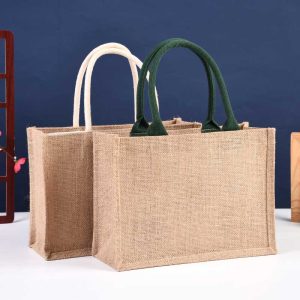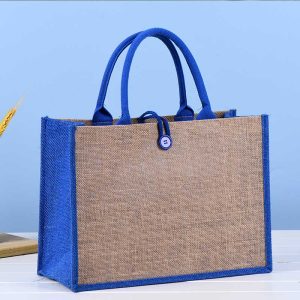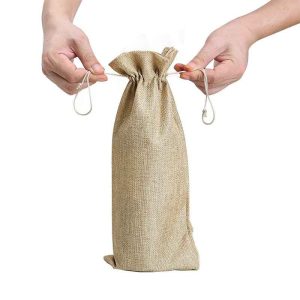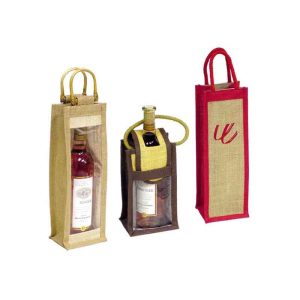
When it comes to choosing between jute bags and canvas bags for your wholesale inventory, the decision isn’t always straightforward. Both are popular alternatives to plastic, both carry strong eco credentials, and both offer ample branding surface. But they serve different needs—and picking the wrong one can mean lower margins, unhappy customers, or wasted inventory.
In this guide, we break down every meaningful difference: material origin, durability, cost, customization options, market perception, and ideal use cases. By the end, you’ll know exactly which bag type fits your business.
Jute Bags vs Canvas Bags: At a Glance
| Factor | Jute Bags | Canvas Bags |
|---|---|---|
| Material | 100% plant-based fiber from jute plants | Usually cotton, sometimes blended |
| Biodegradability | Fully biodegradable in 4-6 months | Biodegradable but takes 1-5 years |
| Carbon footprint | Low; sequesters CO2 during growth | Moderate; cotton is resource-intensive |
| Typical cost per unit | $0.30-$2.00 | $1.50-$5.00+ |
| Minimum order quantity | 500-1,000 units | 500-2,000 units |
| Customization options | Screen print, emboss, foil stamp, laminated | Screen print, DTG, embroidery |
| Durability | Holds 10-20 kg | Very high, heavy-duty canvas |
| Water resistance | Low without lamination | Moderate; denser weave |
| Market perception | Premium eco, rustic aesthetic | Classic, versatile |
What Are Jute Bags?
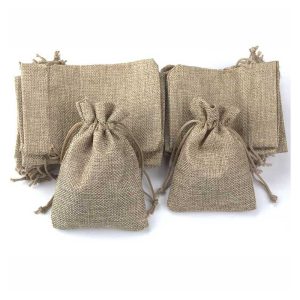
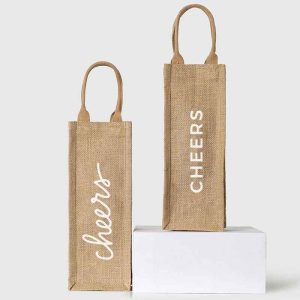
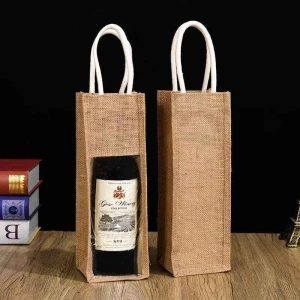
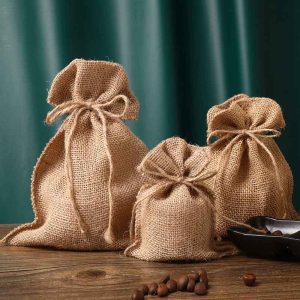
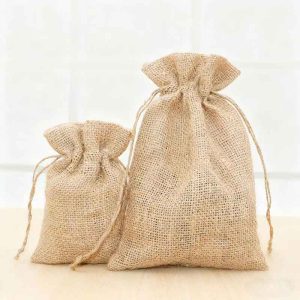
Jute bags are crafted from Corchorus capsularis or Corchorus olitorius – plants native to Bangladesh and India, where the warm, humid climate produces the world’s finest jute fiber. Known as the “golden fiber,” jute is prized for its natural golden sheen, breathability, and remarkable tensile strength.
Jute is one of the most affordable natural fibers in the world, making it a cost-effective choice for wholesale jute bags buyers who want to offer eco-friendly products without premium pricing. A single jute plant sequesters approximately 2.5 kg of CO2 during its 4-6 month growth cycle, making each bag a small but meaningful carbon offset.
What Are Canvas Bags?
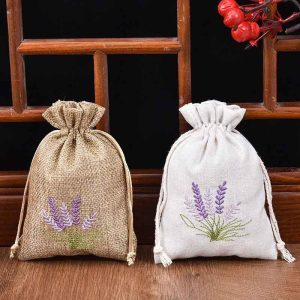
Canvas is a heavy-duty plain-woven fabric, traditionally made from cotton (though modern variants blend in hemp or recycled polyester). Canvas bags are everywhere – from farmer’s markets to high-end boutiques – because the material is incredibly durable, accepts a wide range of printing techniques, and has a timeless, versatile look.
The main advantage of canvas over jute is its superior printability. Canvas takes detailed, multi-color prints beautifully, including photorealistic designs via direct-to-garment (DTG) printing.
Cost Comparison for Wholesale Buyers
For wholesale buyers, cost is almost always the deciding factor. Here’s the honest breakdown:
- Jute bags at jutegreen.com start at $0.50 per unit for standard non-laminated totes with 500+ piece MOQs. Laminated, printed, or premium-finish bags typically range $1.00-$2.50 per unit.
- Canvas bags generally start at $1.50-$2.00 per unit for basic cotton canvas with simple prints, and can easily reach $4.00-$8.00 for heavy-duty or full-color printed versions.
For businesses buying in bulk – say 5,000 units – that difference of $1.00 per bag becomes a $5,000 swing. Jute bags consistently win on price-to-value.
Durability: Which Holds Up Better?
Both materials are strong, but in different ways. Jute has a tensile strength of 200-300 MPa and can comfortably hold 10-20 kg per bag. Canvas is denser and excels in heavy-duty applications like tool bags or heavy promotional kits.
For retail shopping bags and event giveaways, jute holds up perfectly. For industrial or heavy-use bags, canvas may have a slight edge.
Customization: Printing and Branding
This is where canvas has traditionally held an advantage – until recently.
- Canvas: Accepts screen printing, DTG, transfer printing, and embroidery. Multi-color, photographic-quality prints are straightforward.
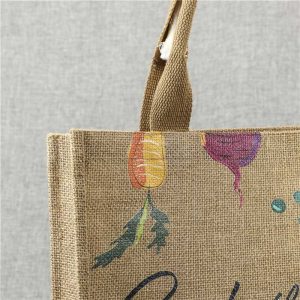
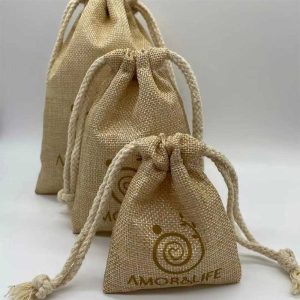
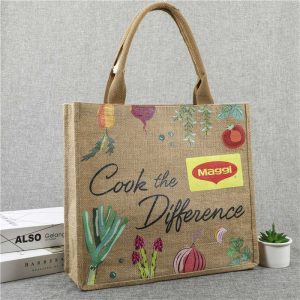
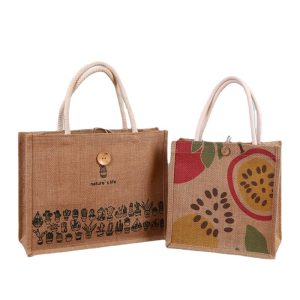
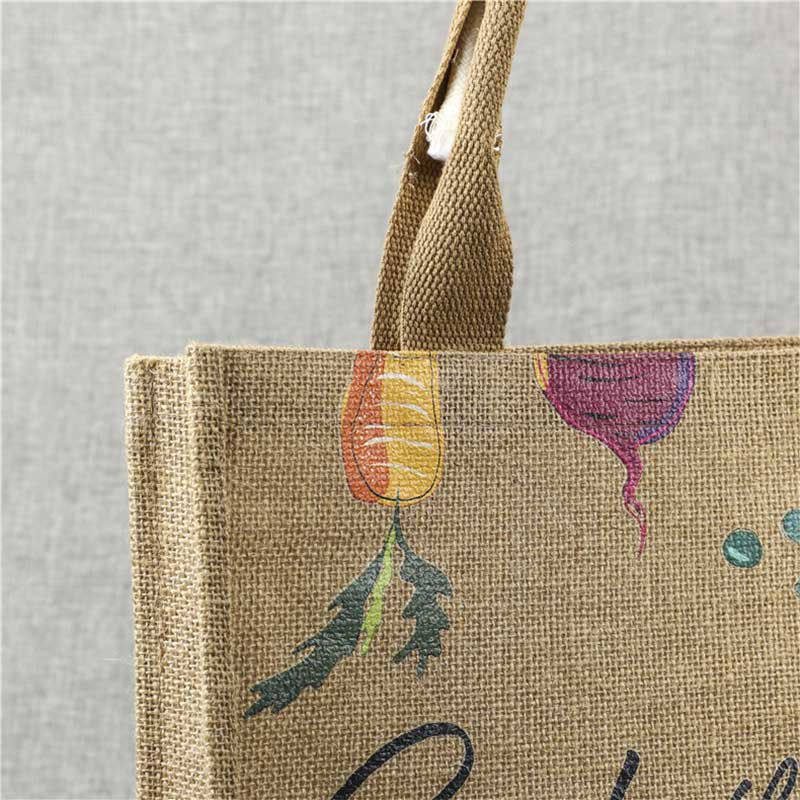
- Jute: Today supports rotary screen printing, heat-transfer, foil stamping, embossing, and lamination. Full-color logos print cleanly, especially on laminated jute.
For most branding purposes – especially simple logos, taglines, or two-to-three-color designs – jute bags offer identical customization quality to canvas at a significantly lower cost.
Eco Credentials: Which Is Greener?
Both outperform plastic by a wide margin, but jute has a meaningful edge in sustainability:
- Jute grows rapidly (120-150 days), requires minimal pesticides or fertilizers, and is fully compostable. It actually improves soil quality during cultivation and sequesters carbon.
- Cotton canvas is water-intensive, requiring around 10,000 liters of water to produce 1 kg of cotton fiber. Even organic cotton carries a heavy water footprint.
For brands with genuine sustainability commitments, jute bags represent the more responsible choice.
Market Perception and Customer Appeal
Jute signals premium eco-consciousness, natural warmth, and artisanal authenticity. It’s the bag associated with boutique retailers, farmer’s markets, and sustainable lifestyle brands.
Canvas is versatile and familiar but doesn’t carry the same “wow, that’s so eco!” reaction. It’s reliable, not remarkable.
If your brand story centers on sustainability and ethical sourcing, jute’s natural texture and golden sheen tell that story before a single word is printed.
Ideal Use Cases
Choose jute bags when:
- You want the strongest eco story at the lowest price point
- Your customers are eco-conscious retailers, event planners, or sustainable brands
- You’re buying in volume for giveaways, packaging, or retail totes
- You want a premium natural aesthetic without premium pricing
Choose canvas bags when:
- You need heavy-duty functionality (industrial use, tools, heavy items)
- Your branding requires photorealistic, full-color printing
- Your customer base skews toward practical durability over eco aesthetics
The Verdict: Jute Bags Win for Most Wholesale Buyers
For the overwhelming majority of wholesale buyers – retail boutiques, event planners, corporate gifting programs, and sustainable e-commerce brands – jute bags are the smarter buy. They deliver:
- ✅ Lower cost per unit
- ✅ Superior environmental credentials
- ✅ Equal or better customization for most use cases
- ✅ Stronger eco brand appeal
- ✅ Faster biodegradability
JuteGreen offers custom wholesale jute bags starting at just $0.50 per unit with 500+ piece MOQs, free shipping, and full customization – logos, colors, sizes, and finishes all available. Browse the full catalog or request a free custom quote today.